IV Drip Franchise Cost UK: Complete Investment Breakdown 2026
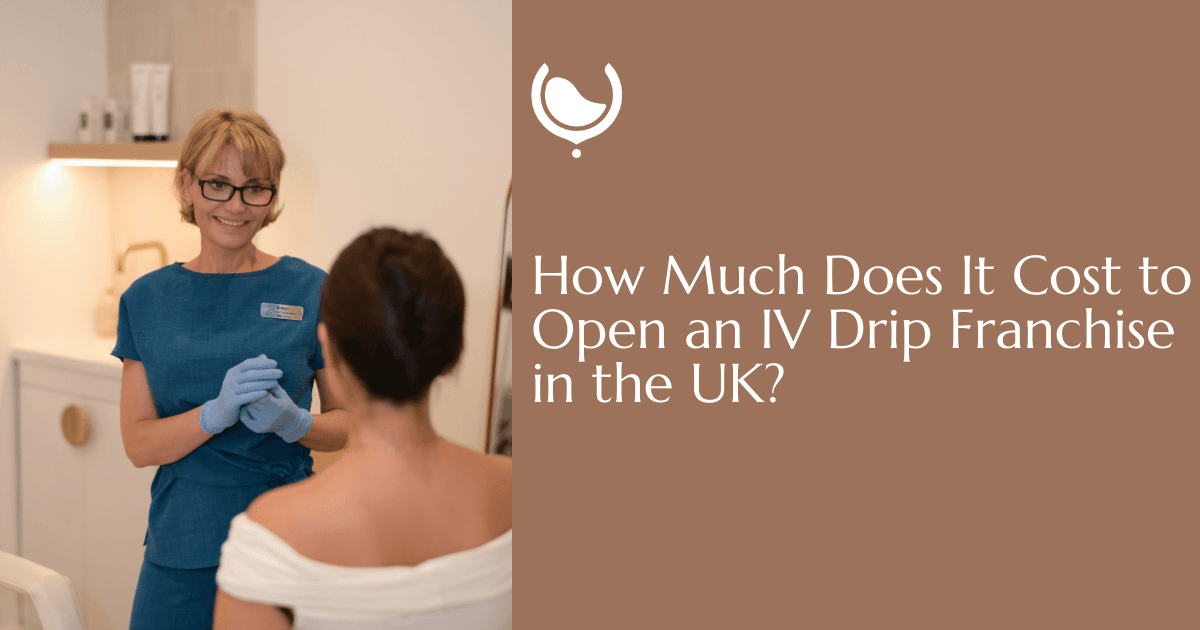


The UK's IV hydration therapy market is experiencing remarkable growth, projected to expand at a compound annual growth rate of 9.9% through 2033. As wellness-conscious consumers increasingly seek bioavailable nutrition delivery and advanced health optimization solutions, entrepreneurs are asking a crucial question: what does it actually cost to open an IV drip franchise in the UK?
This comprehensive breakdown examines the real investment required to launch an IV therapy franchise, from initial franchise fees to regulatory compliance, medical equipment, and operational costs. Whether you're considering a mobile model, shopping centre concession, or full high-street clinic, understanding these financial requirements is essential for making an informed decision about entering this rapidly expanding wellness sector.
Understanding the IV Therapy Franchise Landscape
The global IV hydration therapy market is growing at 8.9% annually through 2030, with the UK representing one of the most sophisticated and regulation-conscious markets for wellness franchises. Unlike typical retail franchises, IV therapy businesses operate within stringent medical frameworks requiring Care Quality Commission (CQC) registration, qualified medical oversight, and clinical-grade protocols.
This regulatory rigor creates higher barriers to entry—but also establishes credibility and patient trust that independent operators struggle to achieve. Established franchise brands provide proven compliance frameworks, medical protocols, and operational systems that significantly reduce the complexity of launching a medical wellness business.
Market participants in the UK IV therapy sector have demonstrated impressive revenue trajectories, with some operators projecting revenue growth from £2.65 million to £10 million while scaling clinic count. These figures reflect strong consumer demand for evidence-based wellness solutions delivered by qualified medical professionals in premium environments.
Franchise Fee Investment
The initial franchise fee represents your entry into an established brand system with proven operational protocols, marketing strategies, and medical frameworks. Typical health and wellness franchise fees in the UK range from £15,000 to £35,000, depending on brand recognition, support infrastructure, and territory exclusivity.
For IV therapy franchises specifically, fees typically fall within the £15,000 to £25,000 range for single-unit agreements. This investment grants you access to the franchisor's intellectual property, clinical protocols, training programmes, and ongoing support systems. Unlike independent clinic launches that require developing every operational system from scratch, franchise fees provide immediate access to refined processes that have been tested across multiple locations.
Premium franchise systems often include comprehensive pre-opening support covering site selection guidance, fit-out specifications, supplier relationships, and launch marketing campaigns. The value extends beyond the initial setup—established franchises provide ongoing access to updated clinical protocols, marketing materials, and operational improvements developed across the entire network.
Clinic Format: Three Investment Models
The UK IV therapy market supports three distinct operational models, each with different capital requirements and revenue potential:
Mobile IV Therapy Model
The mobile format requires the lowest initial capital investment, typically £25,000 to £40,000 total setup cost. This model eliminates commercial rent but requires investment in medical-grade portable equipment, vehicle modifications for safe equipment transport, and comprehensive mobile insurance coverage. Mobile operators serve clients in homes, hotels, and corporate offices, offering premium convenience with lower overhead.
Our IV drip at home service demonstrates the demand for mobile IV therapy in London, where busy professionals value the convenience of receiving medical-grade IV treatments in their preferred location.
Operational advantages include flexible scheduling, minimal fixed costs, and ability to serve affluent residential areas without establishing physical premises. However, mobile models face capacity constraints—a single practitioner can typically complete 4-6 appointments daily, limiting revenue potential compared to multi-chair clinic operations.
Shopping Centre Concession
Concession spaces in premium shopping centres represent a middle-ground investment, typically requiring £40,000 to £70,000 in total setup costs. These locations benefit from high footfall in established retail environments, with fit-out costs generally lower than standalone premises due to smaller square footage and existing infrastructure.
Concession agreements often include percentage-of-revenue rent structures alongside base fees, requiring careful financial modeling to ensure profitability. The format works particularly well for impulse wellness purchases—consumers encountering the service while shopping are more likely to book immediate appointments for hangover recovery, energy optimization, or beauty treatments.
Full High-Street Clinic
Standalone clinics in prime high-street or medical district locations require the highest capital investment but offer maximum revenue potential and brand presence. Total setup costs typically range from £60,000 to £120,000, depending on location, size, and fit-out specifications.
Premium locations in areas like Mayfair, Marylebone, or affluent suburban high streets command higher rents but attract clientele willing to invest in medical-grade wellness solutions. Full clinics support multiple treatment chairs, private consultation rooms, and comprehensive service menus including advanced therapies like ozone therapy and EBOO protocols alongside standard IV vitamin drips.
Premises and Fit-Out Costs
Premises expenses represent one of the most variable cost components in IV therapy franchise investment. High-street locations in London or major cities typically require £15,000 to £40,000 for initial fit-out, covering medical-grade flooring, appropriate lighting, treatment chair installation, storage for controlled substances, and clinical waste management systems.
CQC-compliant clinics must meet specific environmental standards including appropriate ventilation, handwashing facilities, clinical waste disposal, and patient privacy measures. Professional fit-out contractors experienced in medical environments are essential—cutting corners on clinical space design creates regulatory compliance issues that prove far more costly than proper initial investment.
Leasehold agreements for medical premises often require substantial deposits, typically three to six months' rent in advance. Monthly rent varies dramatically by location, from £2,000 to £8,000 for suitable clinic spaces in premium areas. Franchise systems typically provide detailed specifications for compliant clinic design, reducing the risk of costly modifications after lease signing.
Medical Equipment and Infrastructure
Clinical-grade equipment represents a significant upfront investment essential for safe, effective IV therapy delivery. Core equipment requirements include:
Infusion chairs: Medical-grade reclining chairs designed for patient comfort during 30-60 minute treatments typically cost £800 to £2,500 each. Multi-chair clinics require proportional investment, with three-chair operations investing £2,400 to £7,500 in seating alone.
IV infusion pumps and poles: Electronic infusion pumps ensure precise delivery rates and patient safety, costing £300 to £800 per unit. Gravity-feed systems represent lower-cost alternatives at £100 to £200 per pole, though many premium clinics prefer pump precision for consistent treatment delivery.
Monitoring equipment: Blood pressure monitors, pulse oximeters, and emergency oxygen systems ensure patient safety throughout treatment, requiring £500 to £1,500 investment collectively.
Refrigeration and storage: Medical-grade refrigeration for vitamin compounds, saline solutions, and biological materials costs £800 to £2,000, with separate locked storage for controlled substances adding £200 to £500.
Clinical consumables stock: Initial inventory of IV bags, vitamins, minerals, tubing, needles, alcohol wipes, and disposable supplies typically requires £2,000 to £5,000, with ongoing monthly replenishment costs of £800 to £2,500 depending on patient volume.
Total medical equipment investment for a well-equipped clinic typically ranges from £4,000 to £15,000, with ongoing equipment maintenance, calibration, and replacement adding to operational costs.
Staffing Requirements and Costs
IV therapy delivery requires qualified medical professionals, creating higher labor costs than typical retail franchises. Essential staffing includes:
Registered Nurses or Prescribing Practitioners: IV therapy must be administered by registered healthcare professionals with appropriate training and indemnity insurance. Experienced IV therapy nurses command £25 to £45 per hour, with full-time salaries ranging from £35,000 to £55,000 annually depending on experience and location.
Our qualified medical team demonstrates the calibre of practitioners required to deliver clinical-grade IV therapy services safely and effectively.
Medical Director Oversight: CQC regulations require registered clinics to have a named medical director—typically a registered doctor—providing clinical governance and treatment protocol oversight. Medical directors often work on retainer arrangements costing £500 to £2,000 monthly for small single-location operations, or take equity positions in larger franchise agreements.
Front-of-House and Administrative Staff: Patient booking, consultation coordination, and facility management require dedicated administrative support. Reception staff typically earn £22,000 to £28,000 annually, with part-time arrangements suitable for smaller operations.
Successful franchise operations often begin with lean staffing—founder-operators who are qualified nurses can personally deliver treatments while managing business operations, minimizing initial labor costs. As patient volume grows, additional practitioners enable multi-chair operations that dramatically improve revenue potential per square foot.
CQC Registration and Regulatory Compliance
Operating a medical service in the UK requires Care Quality Commission registration, representing both financial investment and significant time commitment. CQC application fees currently stand at £1,440 for initial registration, with annual fees ranging from £1,200 to £3,000 depending on clinic size and service scope.
The registration process typically requires 3-6 months from application to approval, during which premises must be fully compliant with CQC standards before operations can commence. Many franchise operators engage CQC consultancy services costing £2,000 to £5,000 to ensure application success and avoid costly delays or rejections.
Ongoing compliance requirements include annual CQC fees, professional indemnity insurance (£2,000 to £5,000 annually), public liability coverage (£800 to £2,000 annually), and regular equipment safety testing. Established franchise systems provide comprehensive compliance frameworks that significantly reduce the complexity of meeting regulatory requirements independently.
Insurance and Risk Management
Medical services require robust insurance coverage protecting both patients and business operators. Essential policies include:
Professional Indemnity Insurance: Covers medical practitioners against claims of negligence or treatment complications, costing £2,000 to £5,000 annually depending on treatment volume and service scope.
Public Liability Insurance: Protects against patient injury or property damage claims, typically £800 to £2,000 annually for small clinic operations.
Contents and Equipment Insurance: Covers medical equipment, stock, and clinic furnishings against theft, damage, or loss, costing £600 to £1,500 annually.
Business Interruption Insurance: Provides revenue protection if the clinic cannot operate due to damage or regulatory issues, adding £500 to £1,200 annually.
Franchise systems often negotiate group insurance rates across their network, providing cost advantages compared to independent operators seeking coverage individually.
Marketing and Patient Acquisition Costs
Attracting patients to a new IV therapy clinic requires strategic investment in brand awareness and local marketing. Initial marketing budgets for franchise launches typically range from £3,000 to £8,000, covering:
- Professional photography of clinic premises and treatment delivery
- Local digital advertising campaigns targeting affluent postcodes
- Social media presence establishment and content creation
- Google My Business optimization and local SEO
- Opening event or promotional offers to generate initial bookings
Established franchise brands provide significant marketing advantages through national brand recognition, professional marketing collateral, and proven patient acquisition strategies. Independent operators must build brand credibility from zero, often requiring higher marketing investment to achieve comparable patient volumes.
Ongoing marketing costs typically represent 5-10% of monthly revenue for growing clinics, with digital advertising, influencer partnerships, and patient retention programmes driving sustainable growth.
Revenue Potential and Investment Return
The UK IV therapy market demonstrates strong unit economics when operations achieve consistent patient volume. Average treatment prices range from £95 for basic hydration therapy to £350+ for advanced protocols like high-dose vitamin C or NAD+ infusions.
Conservative revenue scenario: A single-practitioner mobile or small clinic operation completing 15 treatments weekly at an average ticket price of £150 generates approximately £117,000 in annual revenue. With typical gross margins of 65-75% after cost of goods sold, this produces £76,000 to £88,000 in gross profit before operating expenses.
Moderate growth scenario: A two-chair clinic with consistent scheduling achieving 40 treatments weekly at £160 average ticket generates £332,800 annual revenue, producing £216,000 to £249,600 in gross profit before operating expenses.
Aggressive expansion scenario: Premium multi-chair operations in high-traffic locations completing 80+ treatments weekly at £175 average ticket can achieve £700,000+ in annual revenue with proportional gross profit potential.
Operating expense ratios typically include 20-30% for rent and utilities, 30-40% for labor costs, 5-10% for marketing, and 5-8% for insurance and compliance, leaving 15-25% EBITDA margins for well-operated locations.
Market participants in the UK have demonstrated impressive scaling potential, with some operators projecting four-fold revenue growth while expanding clinic networks. However, achieving strong returns requires consistent patient acquisition, operational excellence, and strategic location selection.
Typical payback periods for IV therapy franchise investments range from 18 to 36 months depending on model selection, location performance, and operational efficiency. Mobile models with lower capital requirements may achieve faster payback despite lower revenue potential, while premium clinic locations require longer runway but support higher absolute profit generation.
The IV Drip Clinic Franchise Advantage
IV Drip Clinic offers a refined franchise model specifically designed to minimize investment risk while maximizing operational support. With a total estimated setup cost of £34,250, the investment includes comprehensive support infrastructure that independent operators must develop at far higher cost:
The franchise package provides dedicated pre-opening support guiding every aspect of clinic launch from site selection through fit-out specifications. Comprehensive training programmes cover clinical operations, customer service protocols, and business management systems refined across the entire network.
Unlike franchise systems that charge fees then leave operators to navigate complex medical regulations independently, IV Drip Clinic provides onsite and offsite opening support—our team works alongside you during launch to ensure regulatory compliance and operational excellence from day one.
Digital infrastructure setup includes complete website development, social media presence establishment, and local marketing campaign deployment. Professional marketing collateral and brand assets are provided ready for immediate deployment, eliminating the time and expense of developing brand materials independently.
The franchise operations manual delivers detailed protocols for every aspect of running your clinic, from patient booking systems through clinical delivery standards and customer service excellence. This documented knowledge represents years of operational refinement distilled into actionable frameworks.
Our proven model supports diverse treatment offerings including IV vitamin drips, IM booster shots, advanced therapies like EBOO, ozone therapy, and hyperbaric oxygen therapy, providing franchise partners with comprehensive service menus that attract diverse patient demographics.
Is an IV Drip Franchise Right for You?
Opening an IV therapy franchise in the UK represents a significant financial commitment, with total investment typically ranging from £34,000 for streamlined models to £120,000+ for premium high-street clinics. However, the combination of favorable market growth dynamics (9.9% CAGR through 2033), strong unit economics, and proven operational frameworks makes this a compelling opportunity for entrepreneurs passionate about evidence-based wellness.
The key differentiator between franchise success and struggle lies in the support infrastructure provided. Medical regulatory compliance, clinical protocol development, patient acquisition strategies, and operational systems represent complex challenges that established franchise brands have already solved. The value of joining a proven system extends far beyond the initial franchise fee—it represents access to refined processes that independent operators spend years developing.
For individuals committed to delivering medical-grade wellness solutions in a rapidly growing market, IV therapy franchising offers a structured pathway to business ownership with significantly reduced execution risk compared to independent clinic launches.
Ready to explore the IV Drip Clinic franchise opportunity? Learn more about our comprehensive franchise package and discover how our proven support systems can help you launch a successful medical wellness business in one of the UK's fastest-growing healthcare sectors. Contact our team to schedule a confidential discussion about franchise partnership opportunities in your target location.
Frequently Asked Questions
What is the minimum investment required to open an IV drip franchise in the UK?
The minimum investment for an IV therapy franchise in the UK typically ranges from £34,000 to £50,000 for mobile or concession models, with full high-street clinics requiring £60,000 to £120,000. This includes franchise fees, equipment, initial inventory, CQC registration costs, and working capital. Established franchise systems like IV Drip Clinic offer comprehensive packages starting at £34,250 including all essential setup components.
Do I need medical qualifications to own an IV therapy franchise?
Franchise owners do not require personal medical qualifications—however, the clinic must employ registered nurses or prescribing practitioners to deliver treatments and maintain a medical director for clinical governance. Many successful franchise operators come from business backgrounds and focus on operations, marketing, and patient experience while qualified medical staff handle clinical delivery.
How long does CQC registration take for an IV therapy clinic?
CQC registration typically requires 3-6 months from application submission to approval. The process demands that premises, equipment, policies, and staffing all meet regulatory standards before operations commence. Established franchise systems provide comprehensive compliance frameworks and often offer consultancy support to streamline the registration process and avoid costly delays.
What are the ongoing costs of operating an IV drip franchise?
Ongoing operational costs include rent (£2,000-£8,000 monthly depending on location), staffing (£3,000-£8,000 monthly for clinical and administrative personnel), inventory replenishment (£800-£2,500 monthly), insurance (£300-£600 monthly), marketing (5-10% of revenue), and CQC annual fees (£100-£250 monthly). Total monthly operating expenses typically range from £8,000 to £20,000 depending on clinic size and model.
How quickly can I expect return on investment for an IV therapy franchise?
Typical payback periods for IV therapy franchise investments range from 18 to 36 months depending on operational model, location performance, and patient acquisition success. Mobile models with lower capital requirements may achieve faster payback despite lower revenue ceilings, while premium clinic locations require longer runway but support higher absolute profit potential. Strong operational execution and effective marketing significantly accelerate return timelines.
Can I operate an IV drip franchise from home or as a mobile service?
Mobile IV therapy represents a viable and lower-cost franchise model, typically requiring £25,000-£40,000 total investment. However, CQC registration still applies regardless of location, and you'll need appropriate premises for administrative functions, secure storage of controlled substances, and clinical waste management. Many mobile operators maintain small commercial spaces for these compliance requirements while delivering treatments at client locations.
What differentiates IV Drip Clinic's franchise offering from competitors?
IV Drip Clinic provides exceptional value at £34,250 total estimated setup cost, including comprehensive pre-opening support, clinical and business training, onsite launch assistance, complete digital infrastructure setup, professional marketing collateral, and detailed operational manuals. Unlike competitors charging premium franchise fees then providing minimal support, our model emphasizes hands-on guidance through every stage of clinic launch and ongoing operations, significantly reducing execution risk for franchise partners.
What profit margins can I expect from an IV therapy franchise in the UK?
Well-operated IV therapy clinics typically achieve 65-75% gross profit margins after cost of goods sold, with EBITDA margins of 15-25% after all operating expenses. A clinic completing 40 treatments weekly at £160 average ticket generates approximately £332,800 annual revenue with potential net profit of £50,000 to £83,000 depending on operational efficiency. Premium locations with higher patient volumes demonstrate proportionally higher absolute profit potential.
Related Treatments