Can You Get an Iron Infusion on the NHS, or Only Privately?
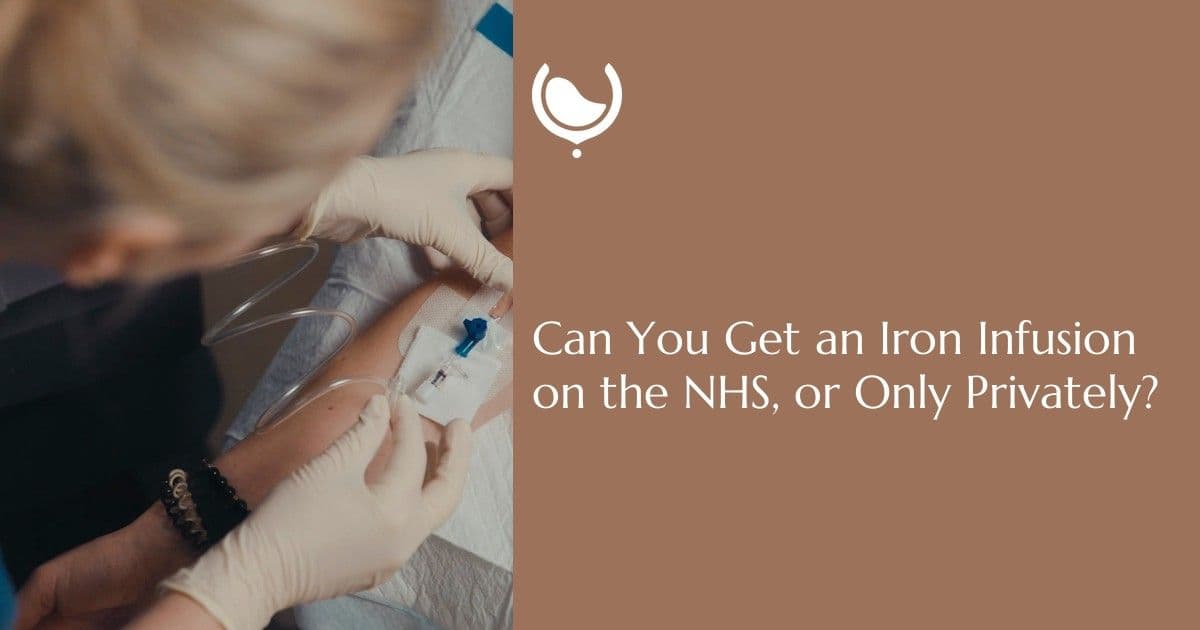


Yes, the NHS gives iron infusions, but usually only after iron tablets have been tried and have not worked or have not been tolerated, or when your iron needs correcting quickly1, 3. Your doctor decides whether you need one, and the hospital team that runs the infusions then contacts you to organise it3, 5. If you would rather not go through a referral, you can book a private iron infusion at our Mayfair clinic directly, after a review of your blood results.
Which route is right depends on your blood results, what has caused the low iron, and whether you are pregnant. Both are covered below, with when each one makes sense.
When the NHS offers an iron infusion
In the NHS, iron tablets come first. The NHS says that once the cause of iron deficiency anaemia has been found, tablets are recommended to replace the missing iron, and you will need to take them for about 6 months2. The British Society of Gastroenterology (BSG) guideline agrees that the common iron tablets "remain the standard therapies"1. It also says the oral route is generally preferred "on the grounds of cost and convenience with comparable efficacy"1.
An infusion comes into the picture in a few situations. The BSG recommends that intravenous iron "should be considered when oral iron is contraindicated, ineffective or not tolerated", and at an early stage if tablets are judged unlikely to work or the anaemia needs correcting urgently1. A hospital leaflet from St George's University Hospitals puts it in plain terms: tablets sometimes do not improve things enough, may not be tolerated or absorbed, or your doctor may need to replenish your iron quickly3.
Tablets are judged by how your haemoglobin responds. The BSG says that if haemoglobin has not risen by at least 10 g/L after 2 weeks of daily tablets, a sustained response later is unlikely, and intravenous iron is more effective than carrying on with tablets1.
Some people may be offered an infusion from the outset. The BSG lists ongoing significant bleeding, malabsorption caused by gut disease, and difficulties with taking tablets (such as severe difficulty swallowing) as situations where the intravenous route may be preferable at the start1.
How to get an iron infusion on the NHS
The usual route has several steps, and the infusion itself comes near the end.
- See your GP. The GP will usually do a blood test to find out whether your red blood cell count is normal2. Ferritin, which reflects your iron stores, is the most useful single marker, and a level below 30 µg/L generally indicates low stores1.
- Find the cause. If the cause is unclear, the GP may arrange a stool test for hidden blood or refer you to a specialist for further checks2. The BSG advises that gut investigation should be considered urgently in adults with a new diagnosis of iron deficiency anaemia that has no obvious explanation1.
- Start tablets. If your red blood cell count is low, the GP recommends iron tablets and may repeat the blood tests over the following months to check your iron level is returning to normal2. The BSG recommends checking the response to tablets within the first 4 weeks1.
- Referral, if tablets are not enough. If tablets do not work, you cannot tolerate them, or you need your iron built up quickly, your doctor decides you need an infusion. At Portsmouth, for example, the relevant hospital team then contacts you to organise it5.
- The appointment. At St George's, the infusion takes about 15 to 30 minutes and you are asked to stay for 30 minutes afterwards so staff can check for immediate side effects. Blood tests six weeks later show whether it has worked3. Times differ between hospitals (a Lincolnshire maternity leaflet, for example, asks you to allow 1 to 2 hours for the appointment4), so your referral team will tell you what to expect.
How long will the wait be? There is no official figure for iron infusions specifically. The closest official measure is NHS England's referral-to-treatment data, which records how long people have been waiting for consultant-led hospital care since their referral. For gastroenterology, the hospital service that investigates unexplained iron deficiency anaemia, people still waiting in London in August 2026 had been waiting a median of about 10 weeks, and 1 in 12 had been waiting more than 33 weeks7. At the larger London trusts, the median ranged from about 6 weeks to about 15 weeks7. These figures cover every gastroenterology referral, not iron infusions alone, and not everyone needs that referral before an infusion, so your own wait may be shorter or longer. Your GP or the referral team can tell you the local timescale.
Getting an iron infusion privately
The private route has no referral step. You can self-refer: before treatment, the clinic reviews your recent blood results (or arranges them) to confirm iron deficiency and set the dose. The blood test needs to be within the last 3 months, and if you do not have one, we can arrange it at the clinic, with results back within 24 to 48 hours. The dose is set from your ferritin and your weight. The clinic is CQC-registered, and infusions are given by NMC-registered nurses at 27 Hill Street in Mayfair. We can also bring the infusion to you through our IV drip at home service, which carries a call-out fee.
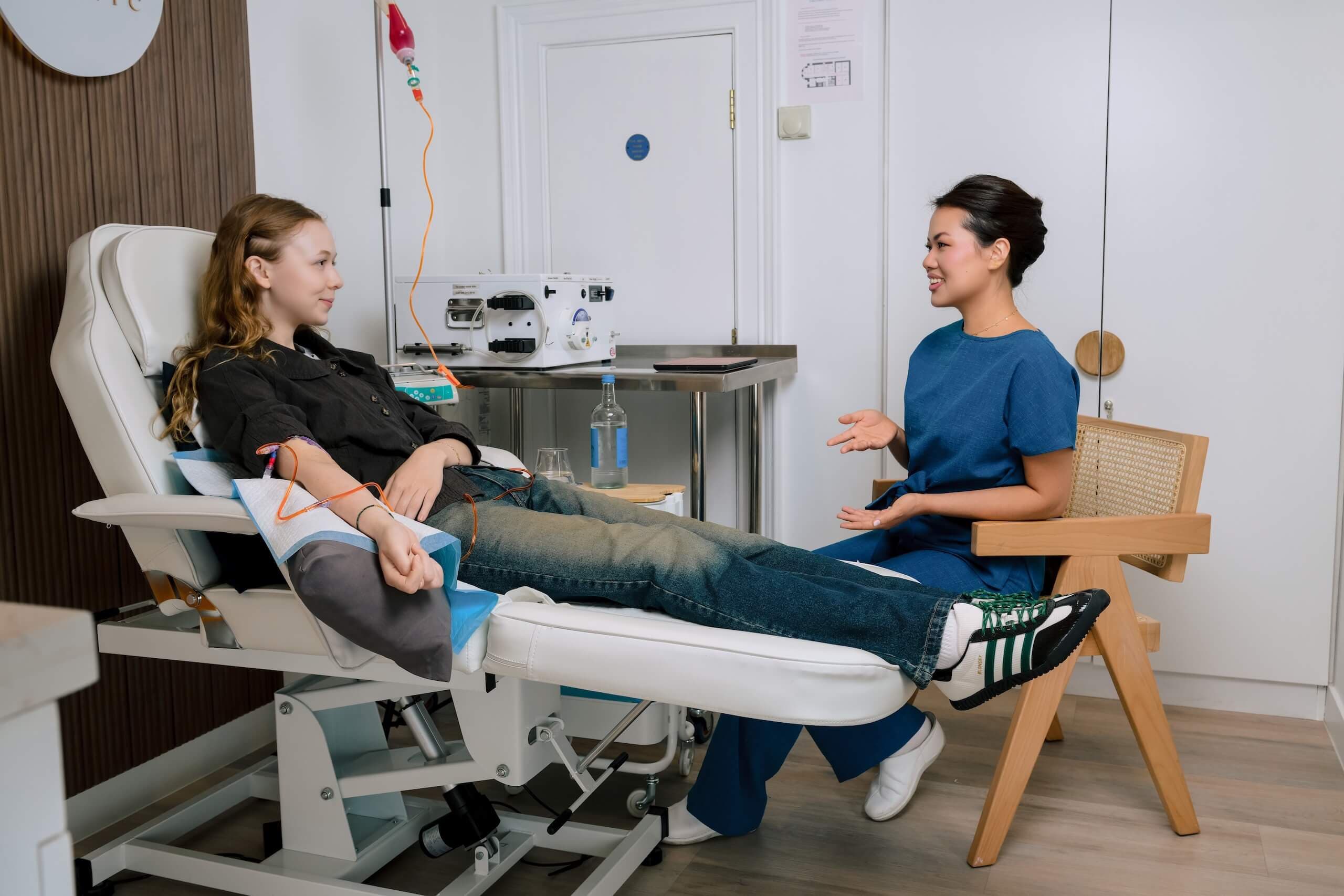
At the consultation, we confirm iron deficiency from your blood results and set the dose. As a guideline, we consider an infusion when ferritin is below 15 to 30 µg/L alongside relevant symptoms, and we only go ahead when it is clinically appropriate.
The private route is quick. Our booking records from August 2024 to October 2026 show that about half of iron infusions took place within 2 days of the appointment being booked, and nearly 9 in 10 within a week. The infusion itself takes from 1 hour up to 2 to 3 hours, depending on the dose, with a registered nurse present throughout. We advise a follow-up blood test 4 to 6 weeks later to check your levels are stable. If you need blood tests first, we offer walk-in blood testing at the clinic.
A private infusion does not replace finding out why your iron is low. If you have anaemia and no clear explanation for it, the advice above still applies, so see your GP1, 2.
What it costs: NHS and private
On the NHS, an iron infusion is free of charge, as NHS services are "free of charge, except in limited circumstances sanctioned by Parliament"6. Privately, an iron infusion starts from £350, and the final price depends on the dose you need, which is set from your ferritin and weight. Full pricing and booking are on our iron infusion page.
Which route suits you
The NHS route is usually the better place to start if:
- you have been told you have anaemia and the cause has not yet been found, because the GP can investigate and arrange referral in one pathway2
- you are pregnant, because your maternity team is the first port of call, and infusions in pregnancy are arranged through the maternity unit, as one NHS trust's leaflet describes4
- you have not yet tried tablets, which remain the first step for most people1, 2
- you have gut symptoms or bleeding that has not been explained, because the cause needs investigating1
The private route usually suits you if:
- you already have recent blood results showing iron deficiency, and the cause is known or already being looked into
- you have tried tablets and they did not work or did not agree with you, or you cannot take them
- you want a fixed appointment, often within the same week once your blood results are in
- you would rather have the infusion at home, your hotel or your office
If your haemoglobin is normal but your ferritin is low, the BSG says it is unclear how well iron replacement works, but that it would be reasonable to offer treatment if you have symptoms. The guideline does not say this means an infusion1. That is worth raising with your GP.
For what low iron can feel like day to day, see our guide to iron infusion and fatigue.
Common questions
Are iron tablets or an infusion better?
For most people the haemoglobin response is similar. The BSG says it is typically similar with tablets and intravenous iron, or marginally faster with intravenous iron, and that intravenous iron replenishes stores more quickly1. St George's says that in the long term both have similar effects3. According to the BSG, infusions replenish stores faster and cause fewer gut side effects, while tablets cost less and are more convenient1.
What are the side effects of an iron infusion?
St George's lists a metallic taste (usually fading within 15 minutes) and feeling sick, light-headed or dizzy. Other reported effects include low blood pressure, muscle aches, rash, flushing and fever3. A rare but significant complication is permanent staining or discolouration of the skin, which can occur at the infusion site or elsewhere on the body3. The BSG puts the rate of allergic-type and infusion reactions at about 0.5%, which is more often than with tablets, though the rate of serious reactions is low and similar for tablets and infusions1. You are observed for 30 minutes afterwards to check for immediate side effects3. For what is normal day by day and when to get help, see our guide to how long iron infusion side effects last.
How many infusions will I need?
The BSG says some intravenous iron preparations can replenish iron stores in one or two infusions1. St George's says a second infusion a week later may be needed depending on how much iron you need, and that you will need blood tests six weeks after the infusion to check it has worked3.
Can I have an iron infusion in pregnancy?
An NHS trust leaflet says an infusion is not advised in the first trimester but is considered safe after that time, and says it is offered when tablets have not worked, are not tolerated, or iron needs building up quickly4. The same leaflet says that if haemoglobin is very low or the birth is close, a blood transfusion may be offered instead4. Privately, we only give iron infusions in pregnancy from the second trimester onwards, case by case after review by our medical team, and in coordination with your maternity team.
Sources
- BSG guideline on iron deficiency anaemia in adults, Gut, 2021
- Iron deficiency anaemia, NHS
- Receiving an intravenous iron infusion, St George's University Hospitals, 2023
- Iron infusion (IV) in pregnancy, United Lincolnshire Teaching Hospitals NHS Trust, 2025
- Intravenous (IV) iron therapy, Portsmouth Hospitals University NHS Trust
- The NHS Constitution for England, GOV.UK
- Referral to treatment waiting times, August 2026, NHS England
Related Treatments